
A Contract for Religious Life
by Allen Viehmeyer
George Weiss was a Schwenkfelder religious educator, especially when the Schwenkfelders were living in Berthelsdorf and later in Pennsylvania. He was well known among Schwenkfelders for his prodigious knowledge of the Bible. Shortly before their departure from Berthelsdorf between April 16th and 25th 1734, his fellow Schwenkfelders persuaded Weiss to be their leader and advisor.
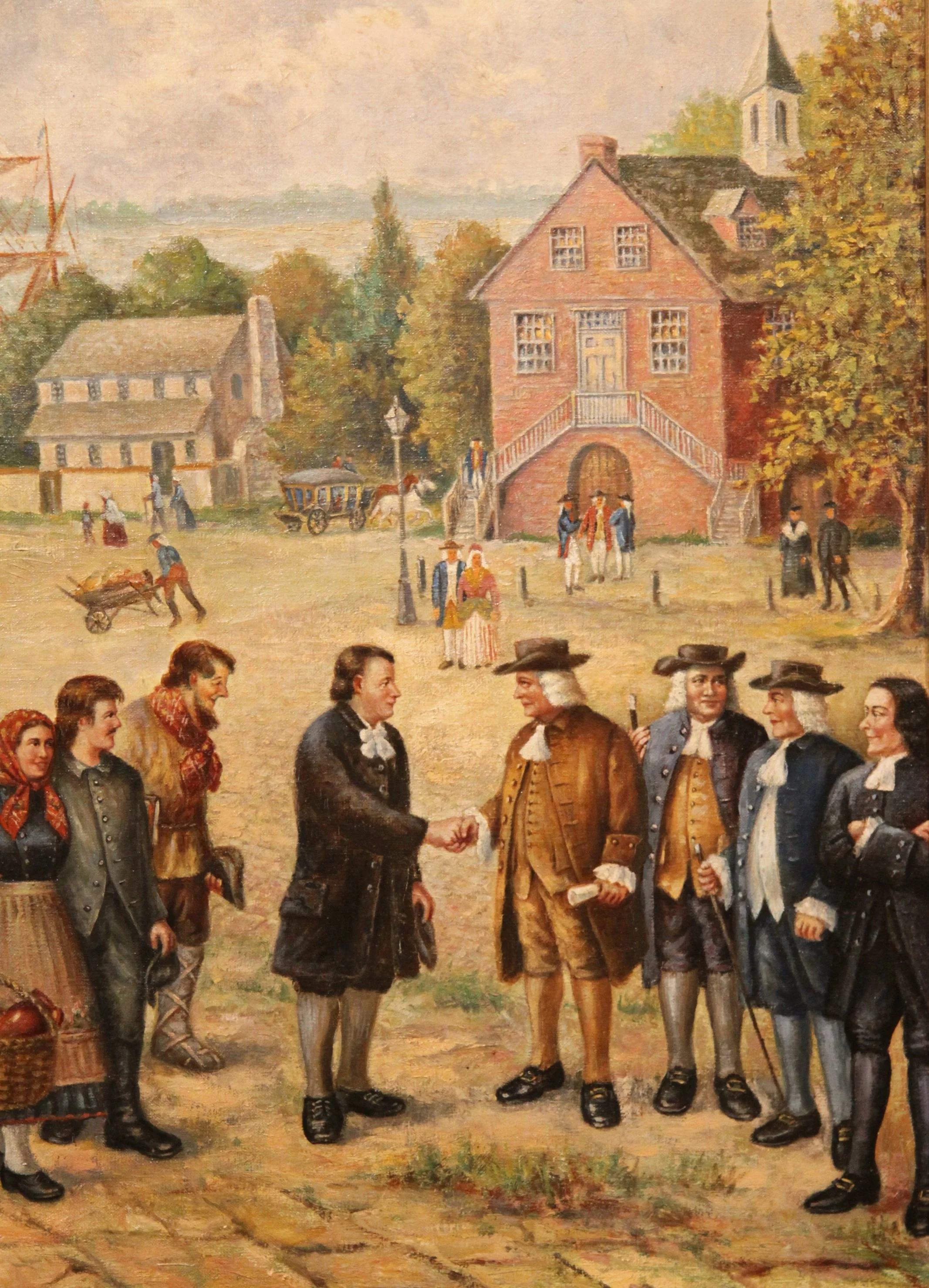
Weiss is depicted as the central figure on left in this twentieth-century painting of the Schwenkfelder Landing in Philadelphia in 1734
A Contract
A contract from late 1735, called “Regulations and A List” makes clear that Weiss was the official leader by proclamation and that Balthasar Hoffmann and David Seipt were the Elders. The responsibilities of the leader and the elders were outlined. The elders make certain that everyone follows the rules of the community, i.e., the Ten Commandments. The leader, elders, and parishioners pledge with a handshake to uphold their obligations. The final section of the contract comprises the Ten Commandments with explications. The signatories accepted the Commandments when they pledged their obedience.
The Ten Commandments
Unlike the general statements in the Bible, the Ten Commandments in this contract are explained with examples. Weiss expands on "Thou shalt not steal" to include actions like pilfering small items and stresses the importance of constantly supervising children so they do not develop bad habits. Similarly, "Honor thy father and mother" covers any form of disobedience in words or actions by any child, young or old. Weiss’s detailed explanations suggest he wanted clear, practical guidelines for those he led.
Weiss dutifully fulfilled his obligations to his fellow Schwenkfelders, riding a circuit to attend to the spiritual needs of his flock who were flung far and wide. He died in March 1740.