Pennsylvania German Artifacts You Can Stand Next To
These are not reproductions. The looms, plows, cider presses, and household objects in our collection were made and used by real Pennsylvania German families across two centuries of rural life. At Schwenkfelder, Pennsylvania German museum artifacts are displayed in context — including inside a fully reconstructed 1826 Pennsylvania barn where agricultural tools occupy the space they were built for.
What the Collection Covers
Our museum artifact collection spans the full range of Pennsylvania German daily experience from the 1700s through the early 1900s. Farming, weaving, food production, household craft, and community life are all represented — not as categories on a label, but as physical objects that document how people actually lived.
The collection includes:
- Farm tools and field equipment used across generations of Pennsylvania German agricultural life
- A working loom and textile production tools that connect directly to our fraktur and coverlet holdings
- Cider presses, barrels, and food preservation equipment reflecting the rhythms of the rural calendar
- Furniture and household objects from Pennsylvania German homes — chests, chairs, storage pieces, and decorative items
- Religious and community objects that trace the spiritual and social life of Schwenkfelder and neighboring Pennsylvania German families
- Agricultural machinery and barn equipment displayed inside the 1826 barn structure on our property
The 1826 Barn: Agricultural History in Its Original Context
The most distinctive element of our artifact collection is where part of it lives. Our reconstructed 1826 Pennsylvania barn houses farm equipment and agricultural tools in the kind of space they were actually used in — not a gallery, but a working barn structure. Visitors on the guided barn tour move through the collection the way a farmer would have moved through the building: surrounded by the scale, smell, and weight of rural agricultural life.
Agricultural history artifacts in Pennsylvania are often isolated behind glass. Here, the barn itself is part of the exhibit. The equipment makes sense because the context does.
Objects That Connect to Pennsylvania Transportation History
Our collection includes artifacts that speak to Pennsylvania's role as a center of early American commerce and movement — including pieces that connect to the tradition of Pennsylvania-built wagons and overland transport. The Conestoga wagon, developed in the Pennsylvania German corridor of Lancaster and Berks counties, is part of the broader story our agricultural and trade artifacts help tell. Visitors researching Pennsylvania transportation history or the material culture of the Pennsylvania German region will find relevant objects and context here.
For researchers tracing specific trades, crafts, or family occupations, our library and archives hold documentary records that complement what the artifact collection shows physically.
If Your Ancestors Lived It, We Preserved It
Researchers and descendants often arrive wondering whether their family's specific trade or way of life is represented. The honest answer is: if your ancestors were Pennsylvania German farmers, weavers, craftspeople, or community members in the 1700s and 1800s, the objects they used every day look a great deal like what we hold.
The Schwenkfelder artifact collection is not a survey of Pennsylvania history in the abstract. It is a preserved record of a specific community's material life — the rural life artifacts, household objects, and farm tools of Pennsylvania German families who built something lasting in Montgomery, Berks, Lehigh, and Bucks counties. Standing next to these objects is a different experience than reading about them.
Frequently Asked Questions About the Museum Artifact Collection
What types of Pennsylvania German museum artifacts are in the collection?
The collection includes farm tools, furniture, household objects, looms, cider presses, food production equipment, religious items, and agricultural machinery — representing the full range of rural Pennsylvania German life from the 1700s through the early 1900s. Many pieces are displayed inside the 1826 barn on our property.Are the artifacts originals or reproductions?
All artifacts in the collection are original objects. Nothing on display is a replica. These are the actual tools, furniture, and household items made and used by Pennsylvania German families over two centuries.Can I see the agricultural history artifacts in the barn?
Yes. Our guided barn tour brings visitors through the 1826 reconstructed Pennsylvania barn, where farm equipment and agricultural tools are displayed in the structure they were built to work in. Tours are available during regular museum hours.Does the collection include artifacts related to specific trades or crafts, like weaving or woodworking?
It does. The collection covers weaving and textile production, woodworking, food and cider production, farming, and household craft — alongside religious and community objects. Researchers tracing a specific family trade or occupation will often find relevant material in both the artifact collection and our research library.How does the museum artifact collection connect to genealogy research?
The artifact collection provides material context for what documentary genealogy research uncovers. If you are tracing Pennsylvania German ancestors through church records or family documents, the objects in our collection show how those families lived and worked. Our research services team can help you connect both.

Visit Us
Pennsburg sits in the Upper Perkiomen Valley, approximately 45 minutes northwest of Philadelphia, 30–40 minutes from Allentown and the Lehigh Valley, and a short drive from Quakertown, Green Lane, and East Greenville. On-site parking is available.
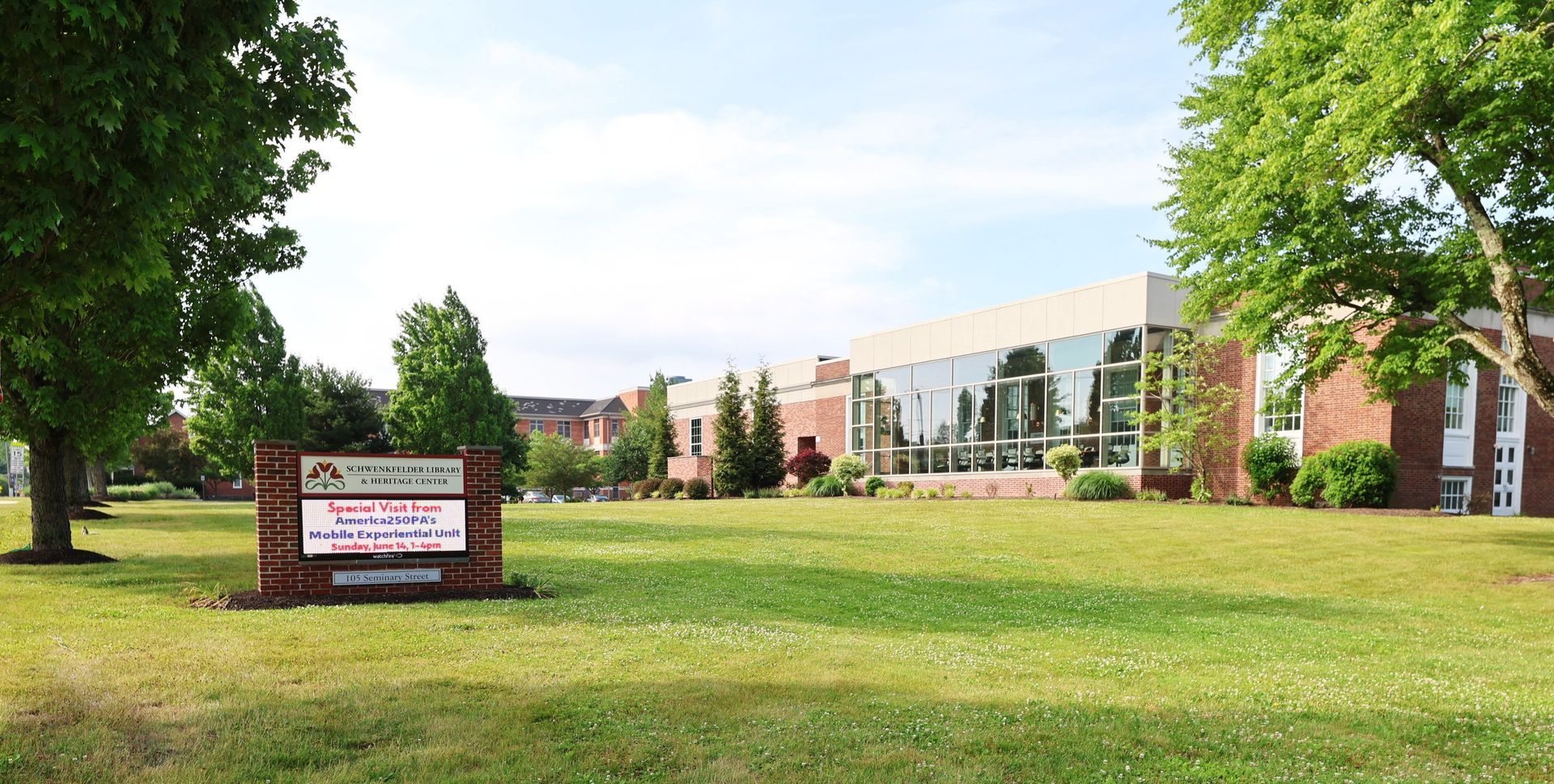
Schwenkfelder Library & Heritage Center 105 Seminary Street, Pennsburg, PA 18073
Montgomery County, Pennsylvania