
Museum Artifacts
The museum collection of three-dimensional artifacts, textiles, art, and paper items supports the mission of the Heritage Center to preserve and tell the story of the Schwenkfelders and the Upper Perkiomen Region.
How It Started
The push to preserve old German-language books and manuscripts held by Schwenkfelder families began in the late 1800s, and the three-dimensional objects, Fraktur, and art that comprise the museum collection followed soon afterward. In 1908, the first object for the museum collection was given to the Schwenkfelder Historical Library collection by David D. Kriebel. Mr. Kriebel donated a copy of the
Christliche Betrachtungen über die evangelischen Texte by Erasmus Weichenhan, an important Schwenkfelder book, which just happened to contain a Fraktur bookplate made by Schwenkfelder schoolmaster David Kriebel.

Permanent Exhibits
Changing Exhibits
Explore the Catalog
How We've Grown
Since our inception in 1908, the museum collection has grown to include:
- more than 1000 works of Fraktur, illustrated documents, and folk-art drawings.
- material culture of daily life, including domestic, trades, and agricultural tools and equipment.
- textiles, featuring an extensive collection of samplers and other needlework, quilts, coverlets, textiles for home and farm use, and clothing.
- fine art, including paintings by southeastern Pennsylvania artists such as Walter E. Baum and George W. Bockius.
- furniture and home accessories dating from the colonial period through the 1900s.
Preserving these precious pieces of the past, interpreting them through exhibits, programs, and publications, and research and documentation of the collection is the priority of library/archives and museum collections staff. The cataloging of collections is an ongoing effort of the Curator of Collections and volunteers. The collection’s database can be viewed on this website. The database is updated from time to time to reflect recent additions to the collection and progress with cataloging.
Museum collections researchers or individuals who are interested in seeing specific objects not on exhibit are always welcome, in person, by phone (215-679-3103, ask for Candace), or email candace@schwenkfelder.org.
If you have something that you think would add to the stories we tell, please contact our curator (candace@schwenkfelder.org).
The 1826 Barn: Agricultural History in Its Original Context
The most distinctive element of our artifact collection is where part of it lives. Our reconstructed 1826 Pennsylvania barn tour allows visitors to explore the structure and construction of a real historical artifact. Visitors on the guided barn tour move through the space the way a farmer would have moved through the building: surrounded by the scale, smell, and weight of rural agricultural life.
Objects That Connect to Pennsylvania Transportation History
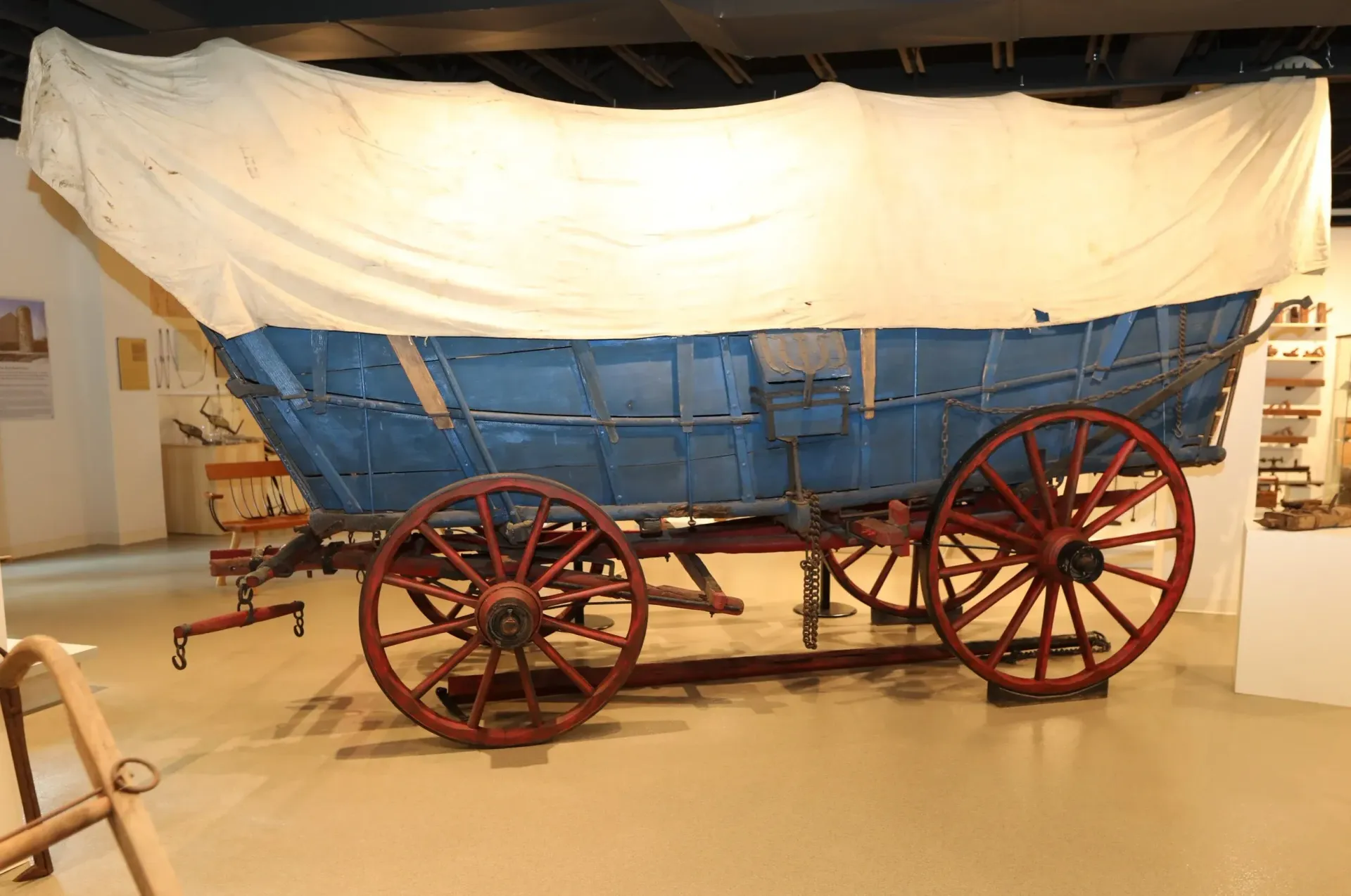
Our collection includes artifacts that speak to Pennsylvania's role as a center of early American commerce and movement — including pieces that connect to the tradition of Pennsylvania-built wagons and overland transport. The Conestoga wagon, developed in the Pennsylvania German corridor of Lancaster and Berks counties, is part of the broader story our agricultural and trade artifacts help tell. Visitors researching Pennsylvania transportation history or the material culture of the Pennsylvania German region will find relevant objects and context here.
For researchers tracing specific trades, crafts, or family occupations, our library and archives hold documentary records that complement what the artifact collection shows physically.
If Your Ancestors Lived It, We Preserved It
Researchers and descendants often arrive wondering whether their family's specific trade or way of life is represented. The honest answer is: if your ancestors were Pennsylvania German farmers, weavers, craftspeople, or community members in the 1700s and 1800s, the objects they used every day look a great deal like what we hold.
The Schwenkfelder artifact collection is not a survey of Pennsylvania history in the abstract. It is a preserved record of a specific community's material life — the rural life artifacts, household objects, and farm tools of Pennsylvania German families who built something lasting in Montgomery, Berks, Lehigh, and Bucks counties. Standing next to these objects is a different experience than reading about them.
Frequently Asked Questions About the Museum Artifact Collection
What types of Pennsylvania German museum artifacts are in the collection?
The collection includes farm tools, furniture, household objects, looms, cider presses, food production equipment, religious items, and agricultural machinery — representing the full range of rural Pennsylvania German life from the 1700s through the early 1900s.
Are the artifacts originals or reproductions?
All artifacts in the collection are original objects. Nothing on display is a replica. These are the actual tools, furniture, and household items made and used by Pennsylvania German families over two centuries.
Does the collection include artifacts related to specific trades or crafts, like weaving or woodworking?
It does. The collection covers weaving and textile production, woodworking, food and cider production, farming, and household craft — alongside religious and community objects. Researchers tracing a specific family trade or occupation will often find relevant material in both the artifact collection and our research library.
How does the museum artifact collection connect to genealogy research?
The artifact collection provides material context for what documentary genealogy research uncovers. If you are tracing Pennsylvania German ancestors through church records or family documents, the objects in our collection show how those families lived and worked. Our research services team can help you connect both.